
Paramedic College in Ontario: The Honest Roadmap to Admissions, Curriculum, Placements, and A-EMCA Success
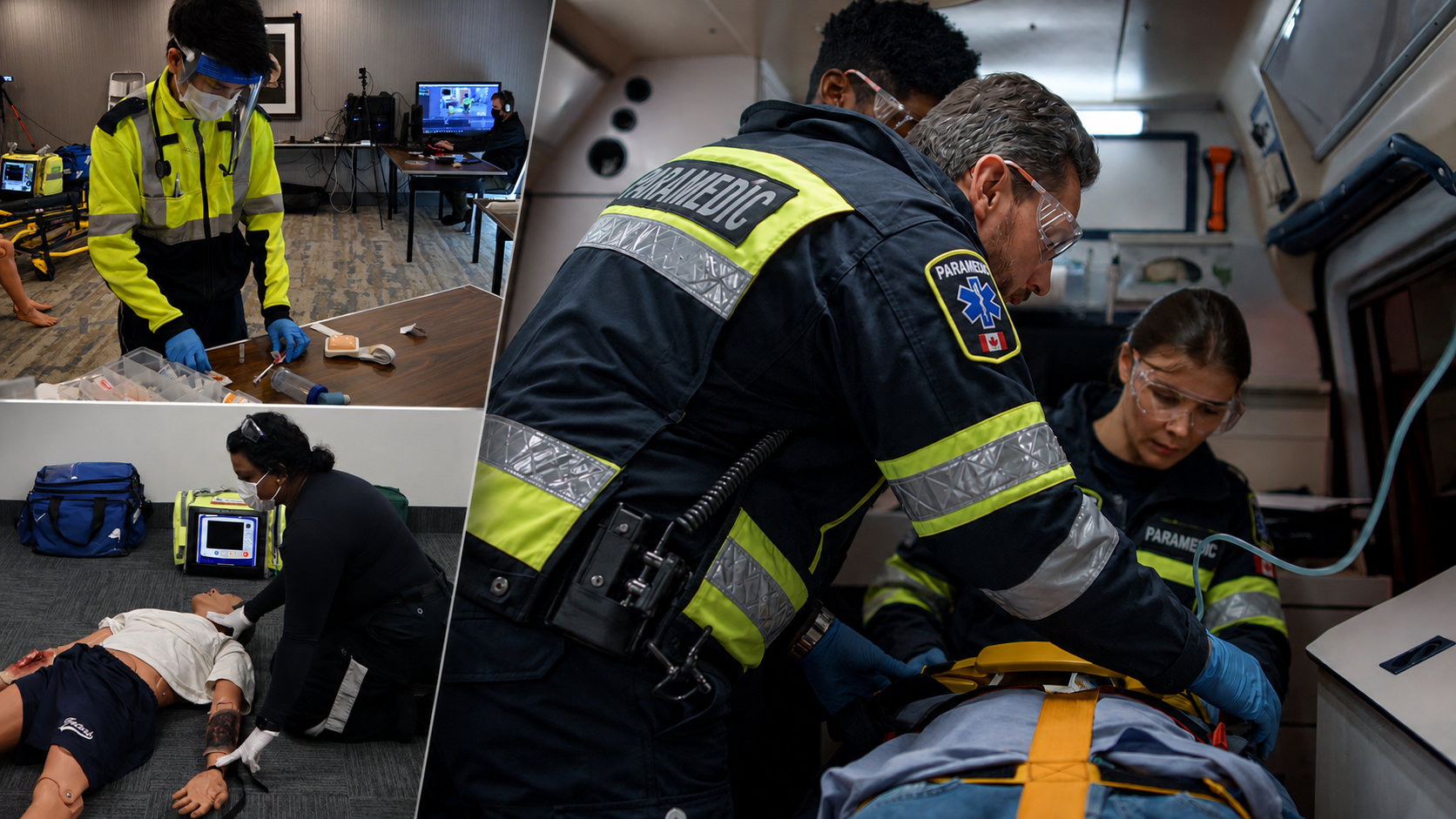
So you've decided you want to be a paramedic. Good. Now comes the part most career guides gloss over: actually getting there.
Ontario's Primary Care Paramedic (PCP) program is one of the most competitive and demanding college programs in the province. The acceptance rates are low. The attrition rates are high. Students who hold university degrees (sometimes graduate degrees) find the pace and breadth of the curriculum genuinely humbling.
That's not meant to scare you. It's meant to prepare you.
This guide covers every stage of the Ontario PCP pathway: from understanding admissions prerequisites and choosing the right program, to surviving the curriculum, completing your placements, and passing the provincial certification exam. It's built on Para-Mentors' direct experience inside Ontario's paramedic training system, not generic career advice.
Para-Mentors is Ontario's specialist in paramedic career development: from college prep and A-EMCA coaching to employer recruitment and professional hiring events. Everything in this guide reflects what we see on the inside of the industry, every day.
Part 1: Getting Accepted: The Competitive Reality

Paramedic programs in Ontario receive far more applications than they have seats. A strong application doesn't just meet the minimum prerequisites, it exceeds them.
Academic Prerequisites: The Bare Minimum (and Why You Should Aim Higher)
Every approved Ontario PCP program requires an Ontario Secondary School Diploma (OSSD) or equivalent. Beyond that, the required courses are consistent across schools:
- Grade 12 English (C or U level)
- Biology - Grade 11 or 12 (C or U level)
- Chemistry - Grade 11 or 12 (C or U level)
- Mathematics - typically Grade 11 (M/U) or Grade 12 (C/U)
Competitive reality: Meeting minimum requirements is rarely enough. Successful applicants typically need high 80s to low 90s across all prerequisites due to the volume of applications. Grade 12 U-level courses in Biology and Chemistry are strongly preferred at the most competitive programs, even where Grade 11 C-level courses technically meet the minimum.
Always verify specific course codes directly on each college's official admissions page before finalizing your study plan, as requirements can change.
- First Aid & CPR: Standard First Aid / Intermediate First Aid and CPR-BLS (Basic Life Support) are commonly required across PCP programs. Most colleges also require TB screening and up-to-date immunization records including Hepatitis B, MMR, and Varicella before your first clinical placement. Confirm the exact requirements with your program directly, as some of these have processing windows that can catch students off guard if left too late.
- Communicable Diseases: In Ontario, paramedic students must meet strict health and immunization requirements before entering clinical and land ambulance placements. These standards align directly with the Ontario Ministry of Health’s Ambulance Service Communicable Disease Standards, which outline mandatory immunizations, medical clearances, and surveillance protocols required to protect both patients and pre-hospital care providers.
Requirements typically include two-step TB skin testing, proof of immunity for Hepatitis B, MMR, and Varicella, as well as annual influenza vaccination. Because bloodwork, booster shots, and medical forms often take weeks to process, reviewing the official Ministry of Health Communicable Disease Standards document early will ensure your documentation is fully cleared well before your clinical placements begin.
Ontario PCP Program Prerequisites at a Glance
The list below summarizes minimum academic requirements for approved PCP programs across the province. Verify directly with each school before applying.
Private colleges often use an internal academic assessment or preparatory course in lieu of traditional high school prerequisites, which can make them a more accessible pathway for mature students. If you are concerned about meeting the standard entry requirements, we highly recommend reaching out to the college's admissions department directly. Many private institutions are often willing to review your professional experience or discuss alternative pathways to help you get started.
Non-Academic Prerequisites
Grades aren't the only gates. You'll also need to have the following in place before starting clinical work:
Driver's Licence: You'll need a minimum Class G2 or G at application, but don't wait on the Class F (Ambulance) licence. Get it done before your program starts. It's one less thing to manage mid-semester when your workload is already heavy, and investing in a driving school significantly improves your chances of passing. Future you will be grateful.
Vulnerable Sector Screening (VSS): A Vulnerable Sector Check is mandatory before any clinical placement. This is a more detailed check than a standard criminal record check. It includes a police information check plus a search to determine whether a person has a record suspension (pardon) for sexual offences listed in the schedule to the Criminal Records Act. It also surfaces findings of not criminally responsible on account of mental disorder, and non-conviction charges in certain circumstances where a strict legal test is met.
First Aid & CPR: Standard First Aid / Intermediate First Aid and CPR-BLS (Basic Life Support) are commonly required across PCP programs. Most colleges also require TB screening and up-to-date immunization records including Hepatitis B, MMR, and Varicella before your first clinical placement. Confirm the exact requirements with your program directly, as some of these have processing windows that can catch students off guard if left too late.
Communicable Diseases: In Ontario, paramedic students must meet strict health and immunization requirements before entering clinical and land ambulance placements. These standards align directly with the Ontario Ministry of Health’s Ambulance Service Communicable Disease Standards, which outline mandatory immunizations, medical clearances, and surveillance protocols required to protect both patients and pre-hospital care providers.
Requirements typically include two-step TB skin testing, proof of immunity for Hepatitis B, MMR, and Varicella, as well as annual influenza vaccination. Because bloodwork, booster shots, and medical forms often take weeks to process, reviewing the official Ministry of Health Communicable Disease Standards document early will ensure your documentation is fully cleared well before your clinical placements begin.
The Strategic Edge: Experience Before You Apply
Beyond grades and certifications, a competitive application demonstrates compassion, maturity, and real exposure to patient care environments. Here's how to build that edge:
Pre-Paramedicine Course: A dedicated pre-paramedicine program (such as those offered by EMT Canada) builds foundational knowledge in anatomy, physiology, and pharmacology, giving you a significant head start in first semester, when the pace is most brutal.
Related Healthcare or Emergency Service Training: Working or studying in a related field is invaluable. Strong options include Nursing (RN/RPN), Personal Support Worker (PSW), Emergency Medical Responder (EMR), Firefighting, Policing, Respiratory Therapy, and Emergency Communications/Dispatch.
Volunteer Experience: High-commitment roles with public-facing interaction carry real weight. Think hospital ED volunteering, search and rescue, MedVents (Scouts Canada), or crisis support lines.
College or University Pre-Health Programs: A semester or year in Pre-Health Sciences, Kinesiology, or Biology provides the foundational knowledge and competitive grades needed to excel in a PCP program.
It is important to remember that many of your future peers will enter the program already holding diplomas or degrees. Investing time in a pre-health or related program helps ensure you are on a level playing field from day one, allowing you to focus on the intense clinical curriculum rather than struggling with basic anatomy and physiology. Furthermore, this provides you with a strong fallback career; should your goals shift or you decide that paramedicine isn't the right long-term fit, you will already have a valuable credential to pivot into other healthcare sectors.
Part 2: Choosing the Right Ontario PCP Program
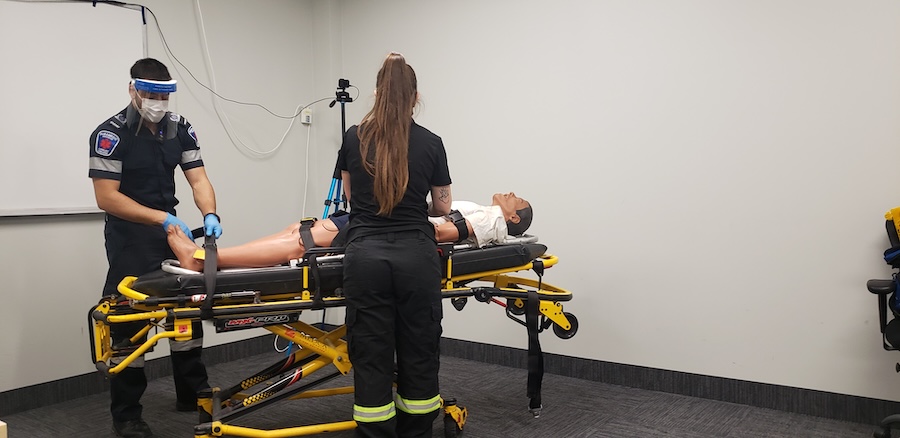
All approved Ontario PCP programs are regulated by the Ministry of Health and lead to the same provincial certification. But the programs are not identical and where you study matters.
Public College Programs: The Standard Path
The two-year PCP diploma is the most common pathway into paramedicine in Ontario. Public college programs are offered across the province, from large urban campuses to smaller northern colleges, and vary considerably in program culture, class size, clinical placement partners, and regional hiring networks.
Admission is extremely competitive. Public PCP programs consistently receive far more applications than available seats, and standing out requires more than meeting the minimum prerequisites. Top academic achievement across all required courses is the baseline expectation, not a differentiator.
Private College Programs: The Accelerated Route
Private colleges offer compressed PCP programs that are shorter than the standard two-year public model. Ministry of Health accreditation is non-negotiable - never enroll in any program, public or private, that is not on the MOH approved list.
Oxford College stands out as a leading private option in Ontario, and is particularly well-suited for:
- Mature learners with existing life and work experience who bring practical context to the curriculum.
- Students who need an accelerated path and cannot commit to a two-year timeline.
- Competitive applicants who want to bypass the lengthy waitlists and high-volume competition found at public programs.
With multiple campuses conveniently located across the GTA, Oxford College is highly accessible. If you're looking for a faster, more flexible route into the profession, we recommend exploring their Primary Care Paramedic program directly.
Be sure to mention that Para-Mentors sent you when you reach out!
Joint Diploma/Degree Programs
A small number of Ontario institutions offer joint programs that combine the PCP diploma with a university degree, extending the program timeline but producing graduates with both provincial certification and an undergraduate credential.
This path suits students who want an academic foundation for career advancement into management, education, or advanced clinical roles.
Part 3: The PCP Curriculum: What You're Actually Learning
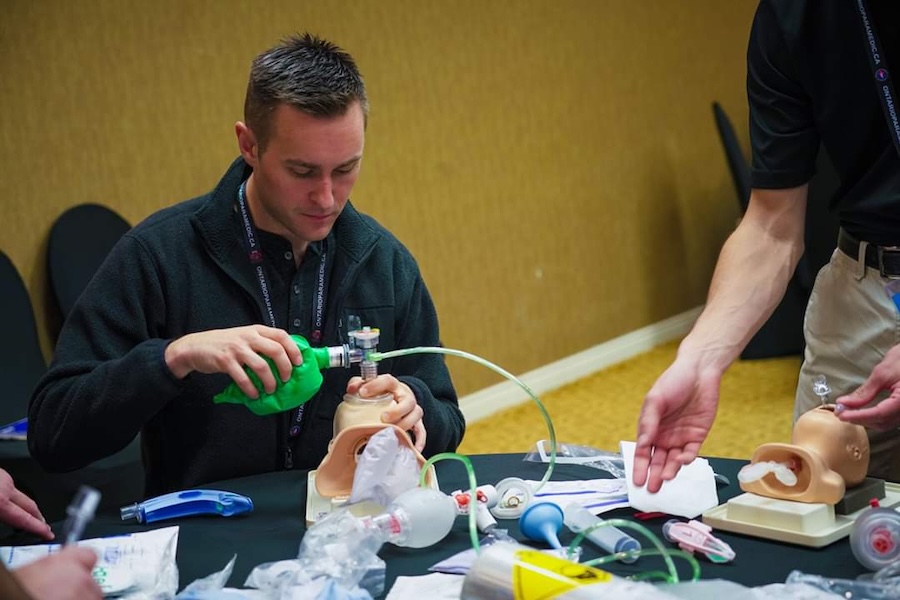
Many students are surprised by the depth and pace of the PCP program. The curriculum is not a basic introductory course; it is a compressed, high-intensity, applied healthcare program.
The Academic Foundation: Three Subjects That Define Your Success
These three courses are where many students fall behind. Master them early.
Anatomy and Physiology (A and P)
The structural and functional foundation of everything else you'll learn. A and P covers every major body system (cardiovascular, respiratory, neurological, musculoskeletal, and more) and expects you to retain it at a level that allows clinical application, not just recognition.
Pathophysiology
The bridge between normal function and disease. Pathophysiology explains how and why conditions like myocardial infarctions, strokes, and respiratory failure develop, giving you the clinical reasoning framework to assess and treat patients, rather than just follow a checklist.
Pharmacology
The study of medications, with a special focus on the ones in your scope of practice: mechanism, dosages, contraindications, side effects, and interactions. This is patient safety at its most direct. You don't get to be vague about pharmacology in the field.
Patient Care Courses
Patient Care Theory: The assessment protocols, treatment rationales, and clinical decision-making frameworks for the full range of medical and trauma calls.
Simulation Lab: Hands-on practice in a controlled setting with mannequins and mock scenarios. This is where you put theory into action before real patients are involved.
Supporting Courses
Physical Fitness and Patient Lifting: Proper lifting mechanics, patient movement, and functional fitness standards. Expect to demonstrate heavy lifts using stretchers and stair chairs. Musculoskeletal injury is a leading cause of career interruption in paramedicine - take this seriously from day one.
Medico-Legal Issues: The legal and ethical framework of Ontario paramedicine: patient consent, PHIPA, the Ambulance Act, professional accountability, and documentation standards.
Ambulance Operations and Vehicle Management: Scene management, radio communications, emergency vehicle operation, and equipment checks. The operational backbone that doesn't show up in clinical textbooks.
Psychopathology and Crisis Intervention: Recognition and management of psychiatric emergencies, substance use presentations, and crisis de-escalation. One of the most practically valuable courses given the realities of modern 911 call volumes.
Part 4: Placements and Preceptorship: Where It Gets Real
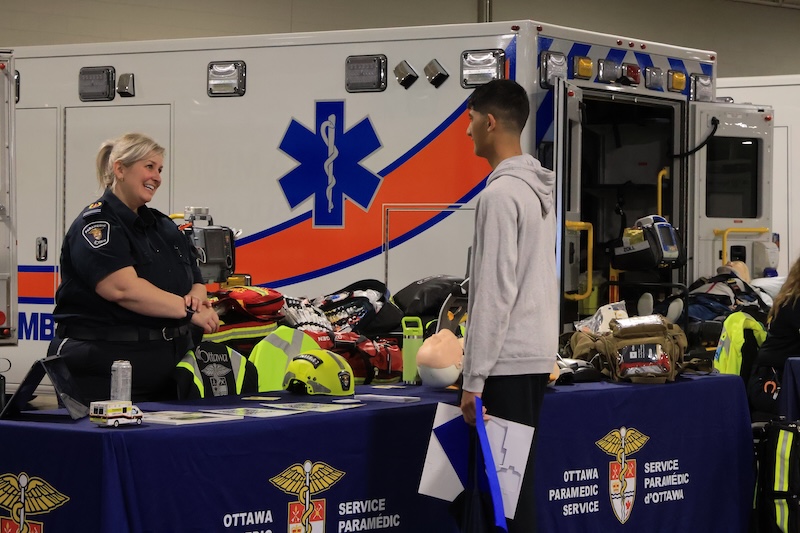
Clinical Placements (Hospital Rotations)
Before you touch a real patient on a real call, you'll spend structured time in hospital departments gaining exposure in controlled, supervised settings. The Emergency Department is the primary rotation, but you may also spend time in Labour and Delivery, Respiratory Therapy, or the ICU depending on your program.
These placements are where your textbook knowledge starts becoming clinical instinct. You'll interact with real patients and real healthcare teams, observe procedures, and begin performing basic clinical functions under direct supervision. It's a controlled environment by design - use it to ask questions and make mistakes safely.
Field Preceptorship (On the Road)
This is the final and most demanding stage of the program. Field preceptorship places you on a municipal ambulance for 8-12 weeks - typically 400 to 500 total hours - working alongside a certified Paramedic Preceptor on real calls.
The timeline is compressed and the stakes are real. Your preceptors have a professional responsibility to certify that you are ready to practice independently before signing off. By the end of your preceptorship, you must be able to confidently manage patients within your scope of practice - not just demonstrate competency under ideal conditions, but consistently, under pressure.
Practical note: Field placements often involve early mornings, late nights, and remote locations. Reliable personal transportation is not optional - public transit cannot get you to a 0600 ambulance bay in a community 45 minutes from campus. Factor vehicle access into your financial and logistical planning before the program starts.
Part 5: Funding Your Education: The Financial Reality
This section deserves honesty, because financial stress is one of the most underrated factors in program attrition.
Working warning: It is nearly impossible to maintain a full-time job during the second half of the program, particularly during clinical and field placements. Even maintaining part-time employment will involve significant personal and academic sacrifices. Plan to reduce or eliminate all paid work commitments well before that stage and build your financial buffer early.
Funding Sources
Ontario Student Assistance Program (OSAP): The primary source of provincial loans and grants. Grants do not need to be repaid and are determined by financial need. Loans cover tuition and living expenses, typically interest-free while you're enrolled.
Ontario Learn and Stay Grant: This program can cover the full cost of tuition, books, and direct educational expenses for students who commit to working in underserved regions - primarily Northern Ontario - after graduation. If this fits your circumstances, it is one of the most powerful debt-reduction tools available.
Education Line of Credit: Most major Canadian financial institutions offer student lines of credit for professional programs at low, prime-based interest rates with deferred repayment options. This is worth exploring as a supplement to OSAP.
Part 6: The A-EMCA Exam: Your Final Hurdle

Graduating from your PCP program makes you eligible to write the Advanced Emergency Medical Care Assistant (A-EMCA) exam - the provincial certification required to work as a paramedic in Ontario. You cannot hold a position in a regulated land ambulance service without it.
Eligibility and Timing
Students are given a window of approximately 210 days post-graduation to successfully pass the exam. Book your sitting and begin preparation the moment your classes end. This is not an exam you want to underestimate or approach without a structured study plan.
What Makes the A-EMCA Difficult
The A-EMCA is notoriously stressful - not just because of the breadth of content, but because of the stakes. Failing it delays your employment. The exam tests the full scope of Ontario paramedic knowledge, including Ontario-specific legislation, protocols, and standards of practice that differ from other provinces.
Strategic advantage: Para-Mentors partners with specialized A-EMCA preparation services who are widely regarded as the most effective exam prep available. If you're serious about passing on your first attempt - and you should be - this is a resource that can make a difference.
From Graduation to Certification
You made it through the PCP program. Now the A-EMCA is the final step between graduation and becoming a certified paramedic in Ontario.
The exam is more than a final academic hurdle. It is your opportunity to demonstrate that you can apply the knowledge, clinical judgment, legislation, and standards you've developed throughout your training. Preparing strategically can make the difference between entering the workforce on schedule and facing a costly delay.
Before you move on, make sure you understand the eligibility requirements, exam timeline, and preparation expectations. The better prepared you are before booking your exam, the more confidently you can take this final step toward your career in paramedicine.
Strategic advantage: Para-Mentors partners with specialized A-EMCA preparation services who are widely regarded as the most effective exam prep available. If you're serious about passing on your first attempt — and you should be, this is a resource that can make a difference.
FAQ: Ontario PCP Programs
How competitive is it to get into a PCP program in Ontario?
Very. Programs consistently receive more applications than available seats, making admission highly competitive at public institutions. While meeting minimum prerequisites is rarely sufficient for community colleges (where successful applicants typically present grades in the high 80s to low 90s plus relevant experience), private colleges often feature higher acceptance rates and more flexible entry pathways.
Can I work during the PCP program?
In the early semesters, limited part-time work may be manageable. By the second half of the program - particularly during clinical and field placements - maintaining paid employment is extremely difficult. Plan your finances accordingly.
Is a private college program equivalent to a public one?
Any Ministry of Health-accredited program leads to the same A-EMCA eligibility and provincial certification. The differences lie in program length, class culture, and the admissions process - not the credential itself.
What happens if I fail the A-EMCA?
You can re-sit the exam within your eligibility window. However, failing delays your employment timeline significantly. Structured preparation - rather than independent study alone - substantially reduces that risk.
Do university degrees count toward PCP admission?
Prior post-secondary education can strengthen your application and demonstrates academic capability, but Ontario PCP programs assess applicants on their specific prerequisite high school courses, not degree credentials. That said, applicants with relevant degrees - in kinesiology, biology, or health sciences - often have stronger foundational preparation for the curriculum.
How to Get Into and Graduate from Ontario's PCP Program (Step-by-Step)
- Complete your prerequisite courses. Aim for Grade 12 U-level Biology and Chemistry, with grades in the high 80s or better. Don't just meet the minimum, exceed it.
- Build your competitive application. Gain experience through healthcare work, volunteering, or pre-paramedicine training. EMR certification through a provider like EMT Canada is a particularly strong differentiator.
- Choose your program strategically. Assess your grades, timeline, and financial situation. Public programs offer the standard path; private colleges like Oxford offer an accelerated route for the right applicant.
- Complete your non-academic prerequisites. G2/G licence, VSS check, CPR-BLS, immunizations. Don't leave these until the last minute, some have processing timelines.
- Survive the curriculum. Take A and P and Pathophysiology seriously from week one. Your performance in these courses determines how manageable everything else becomes.
- Complete your clinical and field placements. Treat these as your most important professional development opportunity. Your preceptors' assessments carry real weight.
- Pass the A-EMCA. Book immediately after graduation. Prepare with a structured course. Don't wing it.
- Apply to Ontario paramedic services. Now the real career begins. Head to Hub 3 for our complete guide to getting hired in Ontario paramedicine.
Your Next Step
Finishing paramedic college is a significant achievement - one that requires planning, financial discipline, and real grit. The students who succeed aren't necessarily the ones who arrived with the best grades. They're the ones who prepared strategically, took the curriculum seriously from the start, and didn't underestimate what the program actually asks of you.
If you're ready to move forward, we're ready to help.
Para-Mentors offers free consultations for candidates at every stage - from pre-application to active hiring. If you want an honest, experience-based conversation about your specific situation before you commit, that's exactly what we're here for.
Ready to take the next step?
<a href="https://paramentors.ca/contact" target="_self" style="text-decoration:none;display:inline-flex;align-items:center;justify-content:center;background:#d9ad4d;color:#111111;border:none;border-radius:8px;font-family:'Inconsolata',monospace;font-size:16px;font-weight:700;text-transform:uppercase;letter-spacing:0.2px;cursor:pointer;padding:1rem;box-sizing:border-box;" >Book a free consultation with Para-Mentors</a>