
So You Want to Be a Paramedic in Ontario?
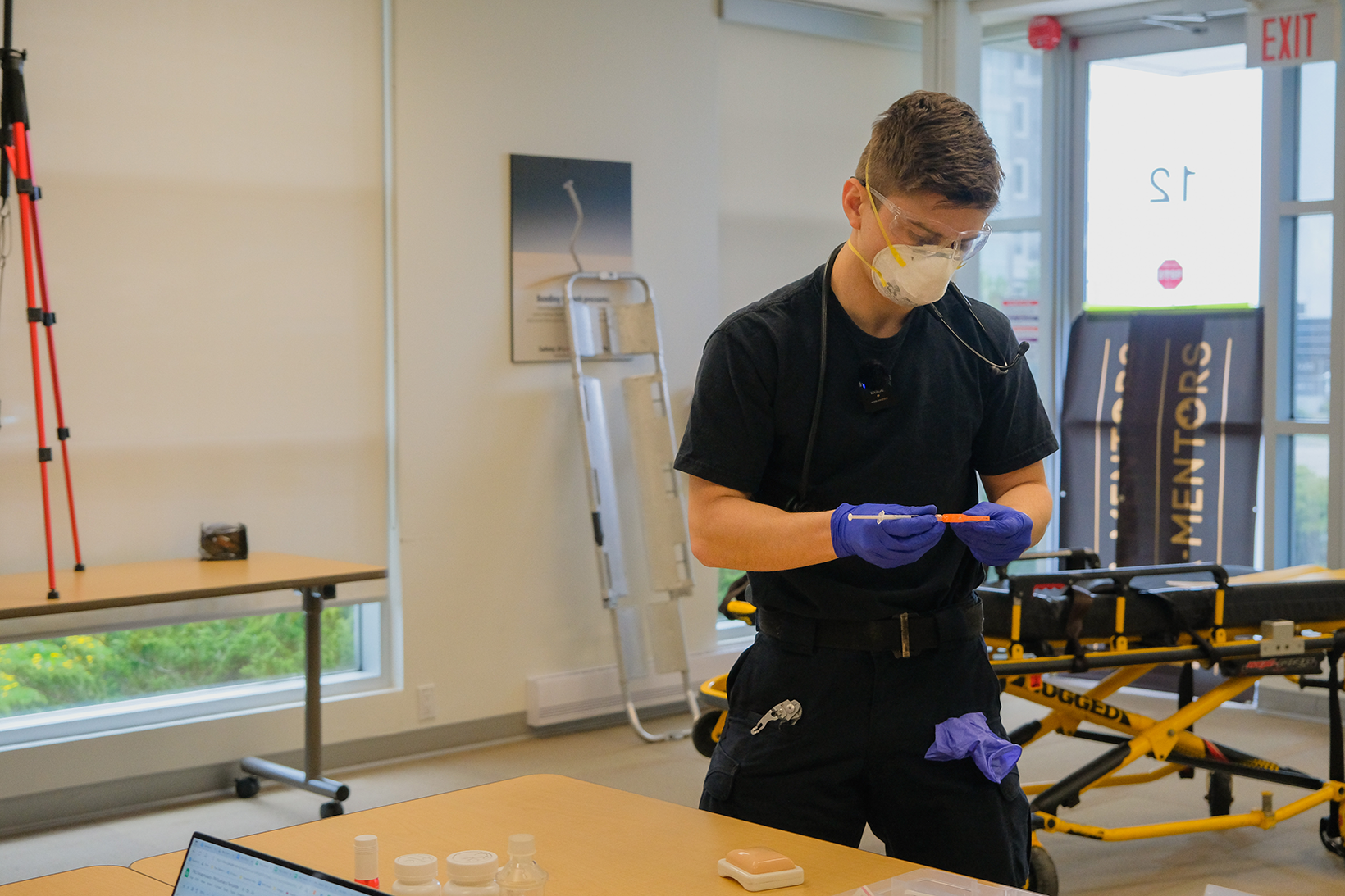
Ontario has roughly 11,000 certified paramedics. Every one of them started exactly where you are right now: curious, a little uncertain, and wondering if this is really for them.
Here's what most career guides won't tell you: paramedicine in Ontario is simultaneously one of the most rewarding and most demanding healthcare careers you can choose. The training is intense, but it's measured in years, not decades. The job is physical, but it rewards intelligence and composure more than brute strength. The pay is competitive, the job security is real, and on the days that matter, this work is genuinely meaningful.
But the TV version? That's not it.
This guide is based on real hiring insights, certification standards, and firsthand experience working within Ontario’s paramedic system, not generalized career advice.
Para-Mentors is Ontario's specialist in paramedic career development: from college prep and A-EMCA coaching to employer recruitment and professional hiring events. Everything in this guide reflects what we see inside the industry every day.
What TV Gets Wrong About Being a Paramedic

Let's start here because it's important. Shows like The Pitt, Third Watch, and ER have done more to recruit paramedics than any college brochure. They’ve also set expectations that don't quite match the job.
The reality isn't any less meaningful. It's just different.
What the screen version shows
- High-speed responses to dramatic traumas
- Split-second heroics followed by clear resolutions
- Paramedics functioning like mobile emergency physicians
- Non-stop action from the moment your shift starts
What the actual job looks like
- A significant portion of your calls are non-emergency transfers: moving patients between facilities, conducting welfare checks, managing chronic medical conditions
- Detailed legal documentation is a cornerstone of the job. Your Patient Care Record (PCR) is a legal document, and you'll write one for every call
- You maintain and check your vehicle and equipment at the start of every shift. Preparedness isn't glamorous, but it prevents mistakes
- 12-hour shifts on a rotating day/night schedule are standard. Long stretches of standby are followed by intense periods of back-to-back calls
- Critical trauma calls exist — they're real, they're demanding, and they're what your training prepares you for. But they don’t represent the majority of your shift.
The real reward isn't the adrenaline. It's the competence, such as arriving on scene, reading a complex situation, making clinical decisions under pressure, and genuinely improving someone's outcome. That's the part the shows actually get right.
What Does a Paramedic Actually Do in Ontario?
Ontario paramedics are autonomous, frontline healthcare providers. That word — autonomous — matters. Unlike many clinical roles, you're regularly making critical decisions without a higher medical authority looking over your shoulder. Paramedics in Ontario follow a physician-delegation model, meaning that their authority to practice comes from physicians through a complex series of written protocols and on-demand phone consultations, termed “patches”.
So what are the core duties that Paramedics in Ontario take on?
Core duties of a Paramedic in Ontario:
- Attending 911 emergency calls, incident standbys, and interfacility transfers.
- Operating an emergency vehicle, such as an ambulance, SUV, or even a bicycle, to bring your team and equipment to your patient’s location.
- Conducting thorough patient assessments to identify illness or injury.
- Performing medical treatment of a wide variety, including IV insertion, medication administration, manual defibrillation, and more.
- Safe patient handling, lifting, and movement (this is physically demanding work).
- Completing accurate documentation, including Patient Care Records for every call.
- Administrative tasks including vehicle and equipment checks, incident reports, and ongoing medical training.
Where paramedics work in Ontario
🚑 Land Ambulance: The most commonly known environment for Ontario paramedics. Paramedic services are generally operated by municipalities, and pair two paramedics per ambulance to respond to 911 calls and other incidents in their community.
🚁 Air Medical / Flight: Specialized roles involving patient transport on helicopters or fixed-wing aircraft. The most well-known air medical organization in Ontario is ORNGE, which employs mostly CCPs (Critical Care Paramedics. There are also other private air ambulance providers who focus on interfacility transfers, such as SkyMedical and Air Bravo.
🚨Community Paramedicine: One of the fastest-growing roles for paramedics in the last decade. Community paramedic (CP) programs are operated by municipal paramedic services with the aim to reduce Emergency Department (ED) visits and 911 use. They generally conduct home visits to patients and operate community clinics for seniors and other vulnerable populations with high 911 and ED use.
⚽ Event & Industrial Standby: Medical standby at concerts, film sets, sports events, and industrial sites. These roles are usually operated by private providers who specialize, such as First Response Ontario and Odyssey Medical. Sometimes, municipal paramedic services will also provide this in some form. Scope of practice and job requirements vary based on the provider and the job.
Ontario's paramedic services vary significantly in size, culture, scope of practice, shift structure, and career advancement opportunity: from large urban services in Toronto, Ottawa, and Peel, to rural and remote services in the north with very different call profiles.
Making a strategic choice about where to apply is one of the most underrated decisions in a paramedic career. Para-Mentors works directly with Ontario Paramedic employers and can provide current, realistic guidance on hiring climates across the province.
Ontario Paramedic Certification: A-EMCA, Base Hospital, & the Delegation Model
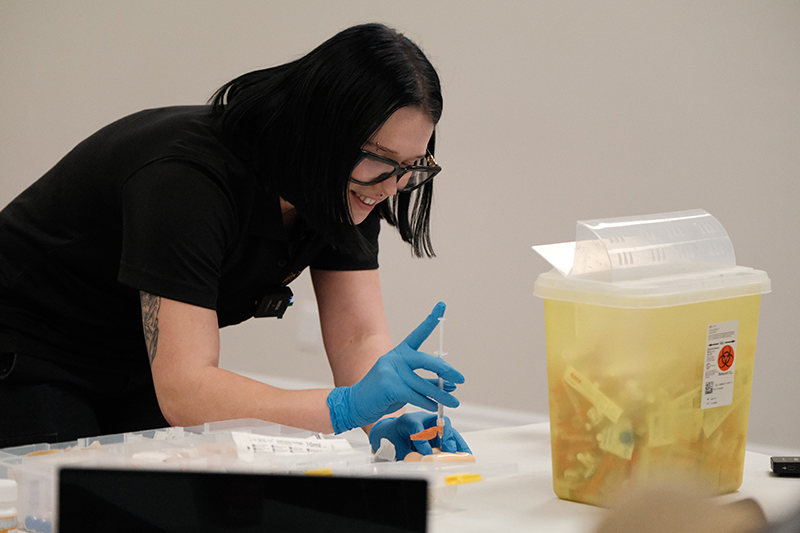
Ontario's certification structure is one of the most common sources of confusion for people entering the profession, and for good reason. It's layered, complex, and highly unique to this province. Here's how it actually works:
The national foundation: NOCPs / NCFP
Since 2011, Canada's paramedic profession has operated within a national framework called the National Occupational Competency Profiles (NOCPs), developed by Paramedic Association of Canada. These profiles defined the competency standards across all certification levels. We’re currently in a period of transition to a new national standard, the National Competency Framework for Paramedics, which aims to modernize the national standards and transition management to the CSA.
These competency frameworks emphasize ethics, clinical judgment, and professional accountability rather than just technical skill. This matters practically: the A-EMCA exam and base hospital standards are built to test the whole profile and account for Ontario-specific regulations.
The A-EMCA: Your provincial licence
The Advanced Emergency Medical Care Assistant (A-EMCA) certificate is issued by the Ontario Ministry of Health. It is your provincial licence to practice paramedicine in Ontario, and you cannot hold a paramedic position in a regulated land ambulance service without it.
Important nuance: The A-EMCA never expires and never needs renewal. However, it does not grant the right to perform delegated medical acts on its own. That requires the next layer.
Check the Official Ministry of Health resources on A-EMCA standards and examinations: ontario.ca
The A-EMCA (Advanced Emergency Medical Care Assistant) is the provincial certification required to work as a paramedic in Ontario. It is issued by the Ministry of Health and does not expire, but it must be combined with Base Hospital certification to legally perform delegated medical procedures in the field.
Base Hospital certification: The authority to act
Ontario paramedics don't have their own regulatory college (unlike nurses or physicians). Instead, the profession operates under a delegation model. A physician (the Medical Director) legally delegates their authority to perform specific medical acts to certified paramedics.
For public land ambulance services, this oversight comes through regional Base Hospitals. For private services, it comes from employed Medical Directors. You cannot initiate IVs, administer most medications, or perform advanced procedures without active Base Hospital (or equivalent) certification.
In plain terms: the A-EMCA gets you certified. Employment and Base Hospital certification gets you practicing. Both are required to work as a paramedic on the road in Ontario.
Ontario levels of paramedic practice
- Emergency Medical Responder (EMR) – Foundational first responder level. Some other provinces employ EMRs to work on ambulances, but Ontario generally does not.
- Primary Care Paramedic (PCP) – Entry-level paramedic certification
- PCP-IV – Expanded PCP scope including IV therapy
- Advanced Care Paramedic (ACP) – Advanced airway, medications, and procedural skills
- Critical Care Paramedic (CCP) – Highest level, typically in air ambulance or critical care transfer services
For full scope of practice details for each certification level, the Ontario Paramedic Association (OPA) maintains an excellent public resource at ontarioparamedic.ca.
<a href="https://paramentors.ca/hiring-prep/resume-editing" target="_self" style="text-decoration:none;display:inline-flex;align-items:center;justify-content:center;background:#d9ad4d;color:#111111;border:none;border-radius:8px;font-family:'Inconsolata',monospace;font-size:16px;font-weight:700;text-transform:uppercase;letter-spacing:0.2px;cursor:pointer;padding:1rem;box-sizing:border-box;" >Polish Your Resume for Ontario Services</a>
Do You Have What It Takes? Honest Self-Assessment
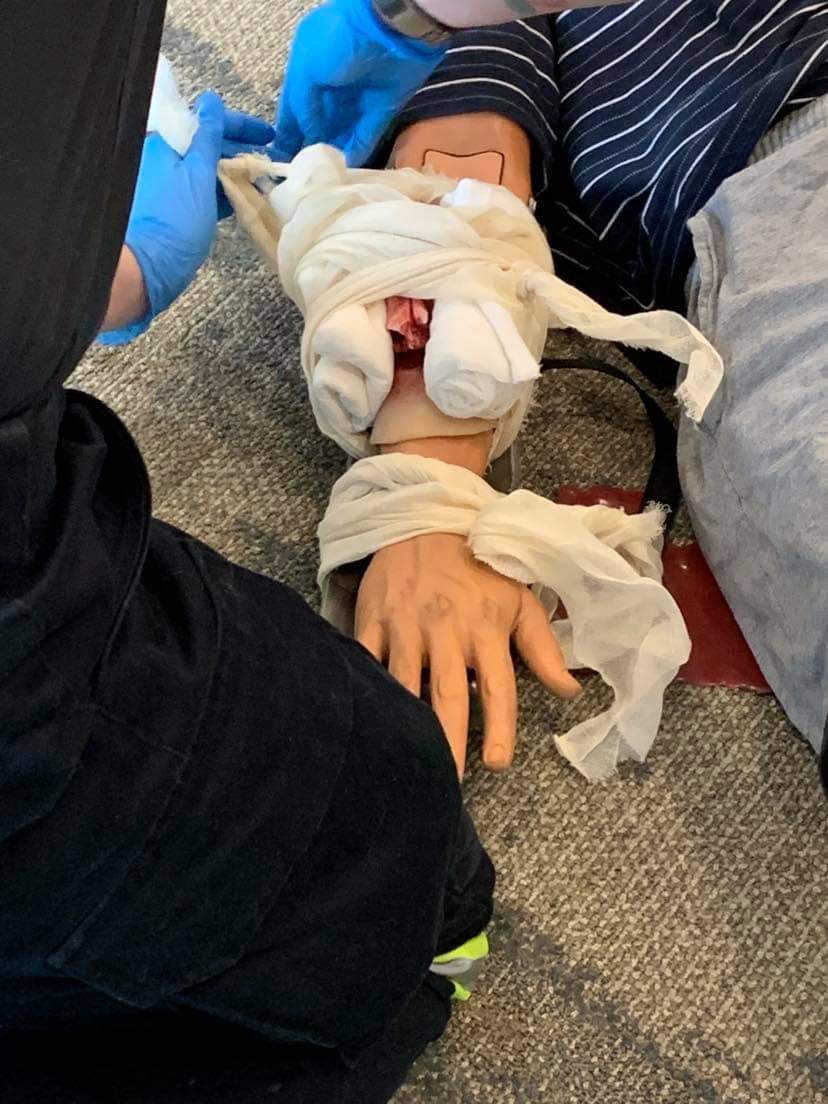
The question worth asking before you apply anywhere is not 'can I get in?', it's: 'will I thrive here?'
The paramedics who build long, satisfying careers share a recognizable set of traits. This isn't about being a certain type of person. It's about being honest with yourself.
Mental and emotional resilience
You will encounter people on the worst days of their lives, and sometimes the last day. Critical pediatric calls. Mental health crisis patients. Traumatic deaths. Families struggling with intense emotions. The job requires the ability to be fully present for patients and others during those moments while maintaining composure and professionalism, and then to process and reset afterward.
This doesn't mean being cold or unaffected. The best paramedics feel things, they just have effective systems for managing what they carry. Peer support programs, EFAP access, and proactive mental health habits are increasingly normalized in Ontario Paramedic culture, and should be part of how you approach this career from day one.
Clinical critical thinking
Paramedicine is not a protocol-following exercise. Protocols are frameworks, not scripts. You'll regularly face presentations that don't fit neatly into any algorithm, and your job is to reason through them, with incomplete information, under time pressure, in someone's living room, in the back of your truck, or in the middle of the road.
If you genuinely enjoy solving complex problems and thinking on your feet, this part of the job is a deeply satisfying result of practice and competence.
Communication and teamwork
You and your partner work in very close proximity for 12 hours. You'll be managing patient communication, family dynamics, hospital handover reports, allied agency interactions, and scene command — sometimes simultaneously. Interpersonal excellence is not a soft skill here. It's necessary clinical infrastructure.
Physical fitness
This is non-negotiable and worth addressing directly. You will regularly lift and move patients, sometimes in awkward environments (narrow hallways, multi-floor walk-ups, small bathrooms, and crumpled vehicles). Musculoskeletal injuries are one of the leading causes of career interruption in paramedicine.
The standard is not elite fitness: it's sustained functional ability maintained throughout your career. A reliable, consistent fitness routine should be seen as part of the job, not separate from it.
Most college programs and many services will test functional physical ability, so expect to pass these milestones numerous times before landing a job. Building capacity before you apply is always the right move.
Shift structure
Standard scheduling in Ontario runs on 12-hour rotating shifts — days and nights. You will work holidays. You will celebrate important dates on different days. Although working on weekends can hamper socializing, having weekdays off can be a great way to avoid crowds while running errands! Working longer shifts in blocks also allows for longer chunks of time off, with most shift schedules incorporating 4, 5, or even 7 days off in a row!
Similar to other healthcare shift workers, day and night shifts generally start (and end) around 5:00 - 8:00, and there may be opportunities for “peak” shifts that start between 8am - 2pm to cover the busiest call volume periods.
Moving to Ontario to Work as a Paramedic
Ontario attracts paramedics from across Canada and internationally. If you trained outside Ontario, here's what you need to know.
Trained in another Canadian province?
You'll need to write the A-EMCA examination through the Ontario Ministry of Health, even if you hold equivalent certification in another province. This is the jurisprudence component — it tests Ontario-specific legislation, protocols, and standards of practice.
The process and examination requirements are detailed at the Ontario Ministry of Health emergency health education page. Review this early, as processing timelines can affect your job search.
Internationally trained?
Recognition of international credentials is handled on a case-by-case basis. The Ministry of Health and individual Base Hospitals can provide guidance on equivalency assessment. This pathway is more complex and timelines vary significantly.
<a href="https://paramentors.ca/hiring-prep/virtual-scenario-practice" target="_self" style="text-decoration:none;display:inline-flex;align-items:center;justify-content:center;background:#d9ad4d;color:#111111;border:none;border-radius:8px;font-family:'Inconsolata',monospace;font-size:16px;font-weight:700;text-transform:uppercase;letter-spacing:0.2px;cursor:pointer;padding:1rem;box-sizing:border-box;" >Get Hiring-Ready with the Pros</a>
How to Know If Paramedicine Is Right for You
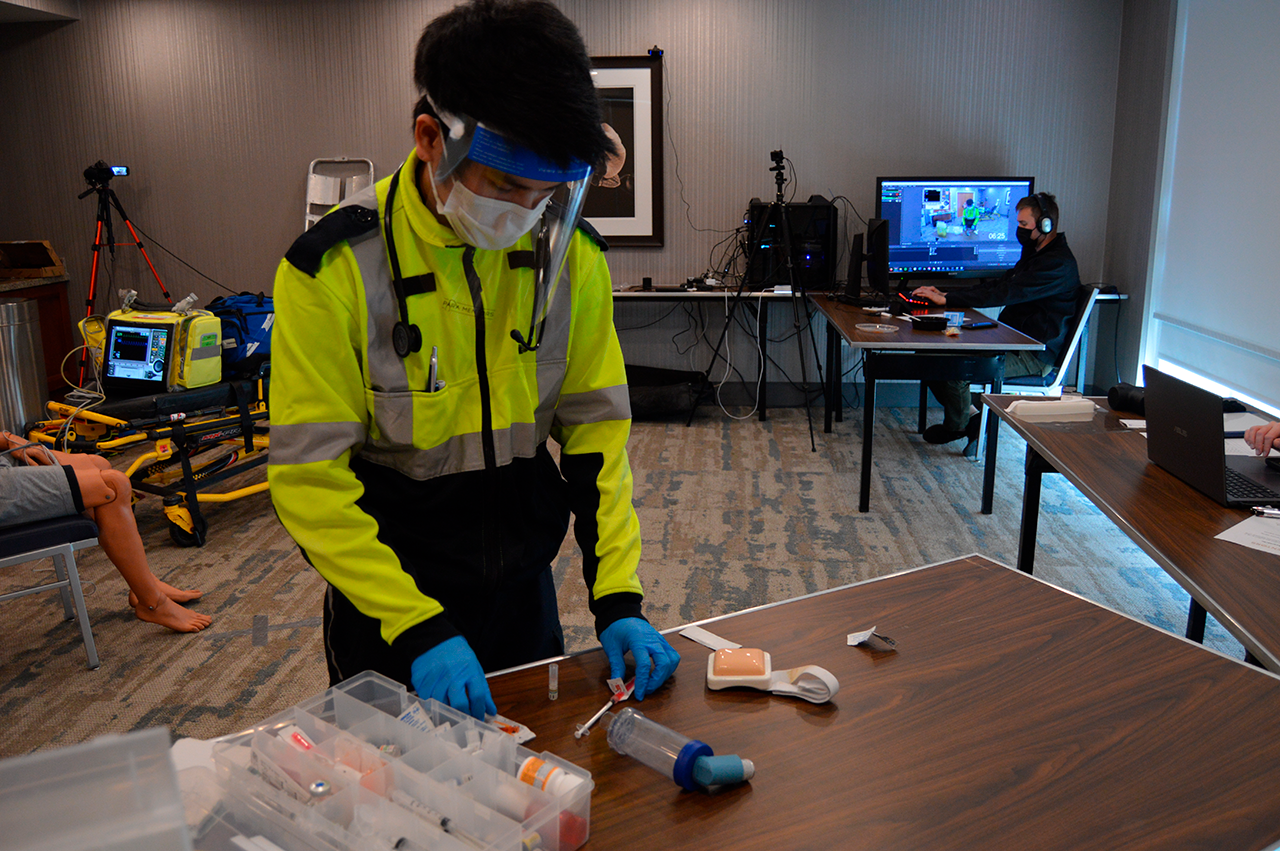
There's no single profile of a successful paramedic. We work with former construction workers, ex-military, nurses transitioning out of hospitals, and students who came straight from high school. The common thread is not background — it's a specific kind of motivation.
Consider the following questions honestly:
- Do you stay calm under pressure or when situations escalate quickly?
- Are you comfortable with uncertainty — making decisions without all the information you'd ideally want?
- Can you work night shifts, weekends, and holidays without it systematically degrading your wellbeing?
- Do you have — or are you willing to build — the physical capacity the job requires?
- Are you confident in your interpersonal and communication skills?
- Are you genuinely interested in helping people with chronic issues and social problems, not just medical emergencies?
- Can you maintain professional composure with patients who are frightened, aggressive, or in altered mental states?
There's no pass/fail here — only honesty. If most of these resonate, paramedicine may genuinely be your path. If several create real hesitation, that's worth sitting with before you commit tuition money.
Para-Mentors offers free consultations for people exploring paramedicine as a career. If you want an unfiltered, experience-based conversation before you apply to college, that's exactly what we're here for.
FAQ About Becoming a Paramedic in Ontario
- Do you need to be physically fit to become a paramedic in Ontario?
Yes. Paramedics are required to lift and move patients in unpredictable environments. Most college programs and hiring services include physical testing, so maintaining consistent functional fitness is essential. - Is paramedicine a stressful career?
Paramedicine can be high-stress, especially during critical calls. However, modern EMS systems in Ontario provide peer support, mental health resources, and structured debriefing processes to help paramedics manage long-term stress. - Can you become a paramedic later in life?
Yes. Many paramedics enter the profession as a second career. Backgrounds in trades, healthcare, or public service are common, and maturity is often an advantage in high-pressure environments. - What skills are most important for paramedics?
The most important skills include clinical decision-making, communication, emotional resilience, teamwork, and the ability to stay calm under pressure. - Is paramedicine a good career in Ontario?
Paramedicine offers strong job stability, competitive pay, and meaningful work. However, it requires shift work, physical endurance, and emotional resilience, making it a highly rewarding but demanding career.
<a href="https://paramentors.ca/hiring-prep/interview-prep-mmi-prep" target="_self" style="text-decoration:none;display:inline-flex;align-items:center;justify-content:center;background:#d9ad4d;color:#111111;border:none;border-radius:8px;font-family:'Inconsolata',monospace;font-size:16px;font-weight:700;text-transform:uppercase;letter-spacing:0.2px;cursor:pointer;padding:1rem;box-sizing:border-box;" >Crush Your Paramedic MMI Interview</a>
How to Become a Paramedic in Ontario (Step-by-Step)
If you've decided this career is the right fit, here's the exact path forward:
Step 1: Apply to an Accredited PCP Program
Choose a Ministry of Health–approved Primary Care Paramedic (PCP) college program. Most programs are two years long and include both classroom and clinical training.
Step 2: Complete Your Paramedic Education
You’ll complete coursework in anatomy, patient care, pharmacology, and emergency response, along with clinical placements and ride-outs.
Step 3: Pass the A-EMCA Exam
After graduation, you must pass the Advanced Emergency Medical Care Assistant (A-EMCA) exam to become provincially certified.
Step 4: Apply to Paramedic Services
Once certified, you can apply to municipal or private paramedic services across Ontario.
Step 5: Obtain Base Hospital Certification
After being hired, you’ll receive medical delegation through a Base Hospital or Medical Director, allowing you to perform controlled medical acts.
Step 6: Begin Working as a Paramedic
With certification and delegation in place, you’re cleared to work on the road as a licensed paramedic.
Ready to move forward? Our next guide walks you through every step of the Ontario paramedic college pathway — from choosing the right program to surviving your clinical placements. Read Hub 2: Your Path to Paramedic College here.
Want to talk it through first? Book a free consultation with Para-Mentors. We work with candidates at every stage (from pre-application to active hiring) and give you honest, industry-based guidance no career website can.
This guide is part of our complete paramedic career series, designed to take you from early research to getting hired in Ontario.
<a href="https://paramentors.ca/contact" target="_self" style="text-decoration:none;display:inline-flex;align-items:center;justify-content:center;background:#d9ad4d;color:#111111;border:none;border-radius:8px;font-family:'Inconsolata',monospace;font-size:16px;font-weight:700;text-transform:uppercase;letter-spacing:0.2px;cursor:pointer;padding:1rem;box-sizing:border-box;" >BOOK FREE CONSULT</a>