
Getting Hired as a Paramedic in Ontario: The Honest Roadmap to Applications, Interviews, Testing, & Base Hospital Certification

You have graduated from paramedic college. Maybe you have passed the A-EMCA, or maybe you are waiting to write it. Either way, the next challenge is the one most career guides underestimate: getting hired.
Ontario's hiring process goes far beyond a typical interview. Despite high demand, getting into a service remains a strict, multi-stage evaluation. Depending on the employer, you will navigate written exams, multiple interviews, clinical scenarios, physical tests and driving assessments before even getting to the Base Hospital certification OSCE test.
The process is not designed to be impossible. It is designed to test your readiness to perform in your new role under pressure. With so many different stages and testing domains, a candidate can lose out on a key career opportunity by being underprepared in a single area.
Ready to make the process predictable and less stressful? Read on as we break down every step from your first application to your final certification.
Para-Mentors perspective: The goal is not simply to help you apply to more jobs. It is to help you understand what employers are actually evaluating at each stage so you can prepare deliberately instead of reacting to every test, interview, or request as it appears.
Part 1: Choose Your Ontario Paramedic Hiring Path

Not every paramedic starts in the same place. The right first job depends on your goals, your current credentials, your willingness to relocate, and how quickly you want to enter the workforce.
Public Municipal Services: The 911 Path
Municipal paramedic services are the primary employers for 911 emergency response. These positions are typically highly competitive and can involve multi-stage hiring processes.
- Goal: Build a long-term career in 911 emergency medical response.
- Potential advantages: Strong compensation, union and pension structures. An opportunity to build foundational experience responding to emergency calls in the community.
- Reality: Large applicant pools, multiple testing stages, and hiring intakes that may occur infrequently. It can be difficult to land a job in the specific service you’re interested in.
- Strategy: Do not wait for a municipal posting to appear before you start preparing. Your resume, technical skills, interview preparation, driving confidence, and required documentation should be ready before you start applying.
Private Medical and Patient Transfer Services
Private-sector services can provide a more accessible entry point for new graduates, particularly when municipal hiring timelines do not line up with your graduation date.
- Patient transfer: Non-emergency transport of stable patients. These roles can provide an opportunity to build assessment, communication, documentation, and patient-care experience.
- Event medical: Medical coverage for events, job sites, film sets, and other environments. Some roles may operate under different delegation requirements depending on the employer.
- Potential advantage: Straightforward hiring and a way to gain experience while continuing to pursue municipal opportunities. You could work in amazing environments such as festivals, concerts, or supporting wildfire and disaster response.
- Consideration: Compensation and emergency exposure can differ from municipal 911 employment.
Geographic Strategy: Do Not Limit Your Search Too Early
If your only target is a highly competitive Southern Ontario municipal service, you will be competing with a very large applicant pool. Services in Northern Ontario or even outside of the province are worth serious consideration since these services generally have smaller applicant pools.
Relocation is a personal decision, but it should be part of your hiring strategy rather than something you consider only after months of unsuccessful applications. Attending the Paramedic Career Fair is a great way to meet with employers outside of your area and find out more about their service!
Para-Mentors perspective: When considering jobs outside of Ontario, remember that licensing requirements vary by province. Gaining certification may depend on your current status in Ontario, and it may be easier to transfer once you’ve been working here first. Do your research before applying, and remember that it’s always beneficial to obtain an A-EMCA in Ontario as this does not expire!
Part 2: Understand the Hiring Timeline

One of the biggest mistakes new graduates make is assuming that a job posting means a job will be filled quickly. Municipal hiring can take months from application to onboarding.
A full municipal hiring process typically takes four to six months. Major spring intakes often open with postings in December or January, followed by testing through the winter and onboarding in spring.
Timing reality: Do not wait until the day a job posting appears to start preparing. Hiring timelines reward candidates who are already organized, credentialed, and ready to test.
Track the services you want to work for, monitor their careers pages, and note when they typically recruit. Your goal is to be ready before the next intake opens.
Don’t miss a posting: Make sure that you’re subscribed to the Paramedic Jobs Newsletter and keep an eye out for your desired service to post!
Part 3: Prepare Before You Apply
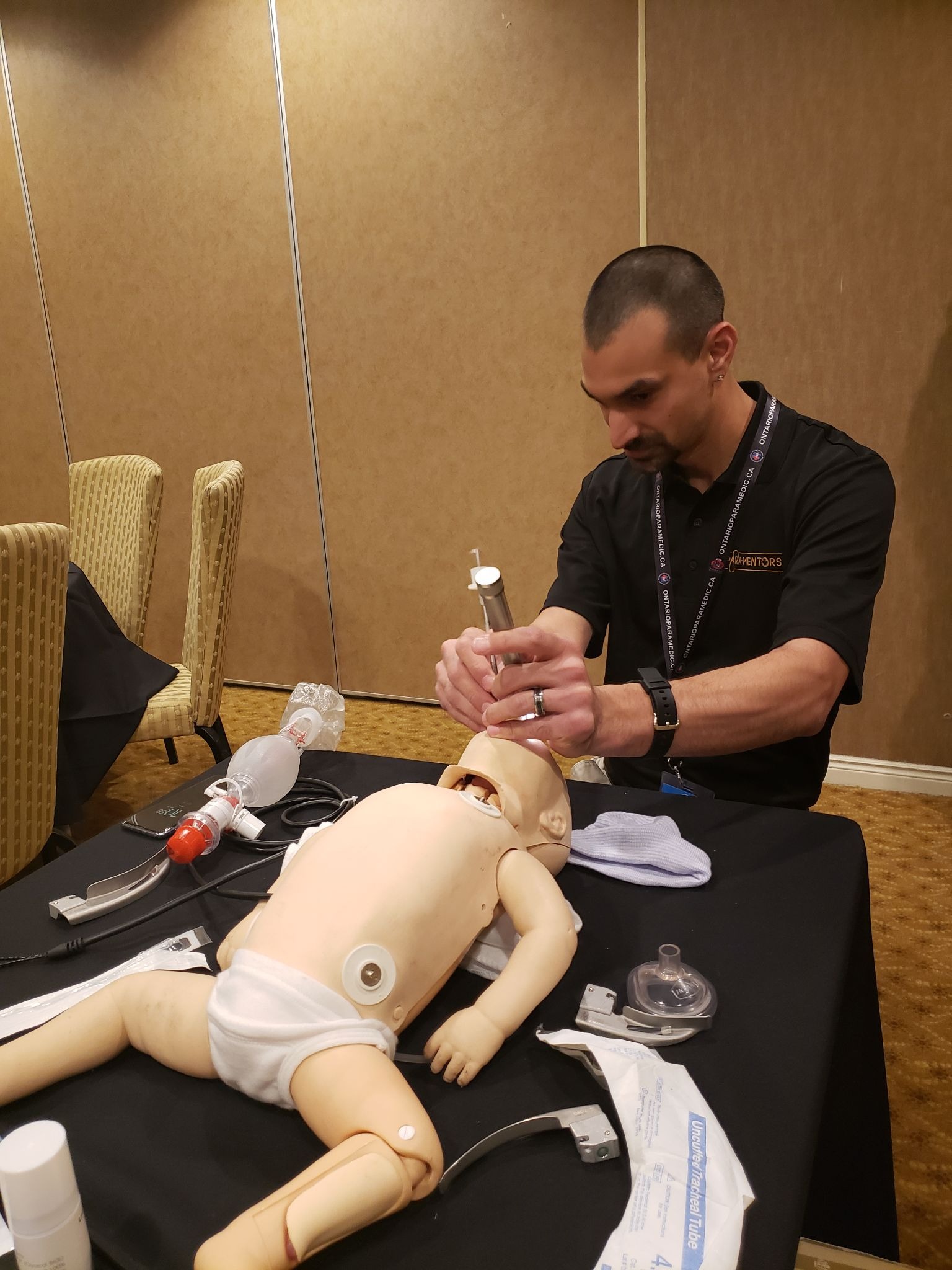
Getting hired starts before you submit your first application. The strongest candidates have their required credentials, documentation, references, physical preparation, and hiring strategy ready before a posting opens.
Build Relevant Experience
Relevant experience can strengthen your application and help you stand out when services are reviewing large applicant pools. Look beyond paramedic-specific experience: healthcare, emergency response, patient-facing roles, volunteering, leadership, and other work that demonstrates communication, judgment, professionalism, and responsibility can all help you build a stronger application.
Required Documentation and Credentials
- Prepare a clean Vulnerable Sector Check when required.
- Ensure you have a valid F class licence and an excellent Driver's Abstract.
- Keep immunization and certification documentation organized.
- Line up three professional or supervisory references who can speak to your clinical performance, professionalism, reliability, and development. Ideally, this will include a former preceptor, a former work supervisor, and an academic leader.
Physical Preparation
Physical testing may be completed through a third party rather than directly through the service. Preparing ahead of time means you can enter the hiring process ready for the physical requirements instead of trying to address them once testing has already begun.
A-EMCA Pending: Do Not Assume You Have to Wait
If you have graduated but have not yet passed the A-EMCA, you may still be able to apply for opportunities as “A-EMCA Pending” status. Some entry-level PCP positions will accept candidates in this status while expecting them to complete the exam within the applicable eligibility window. Verify the exact requirements with each employer before assuming you qualify.
Part 4: Conquering the Hiring Gauntlet
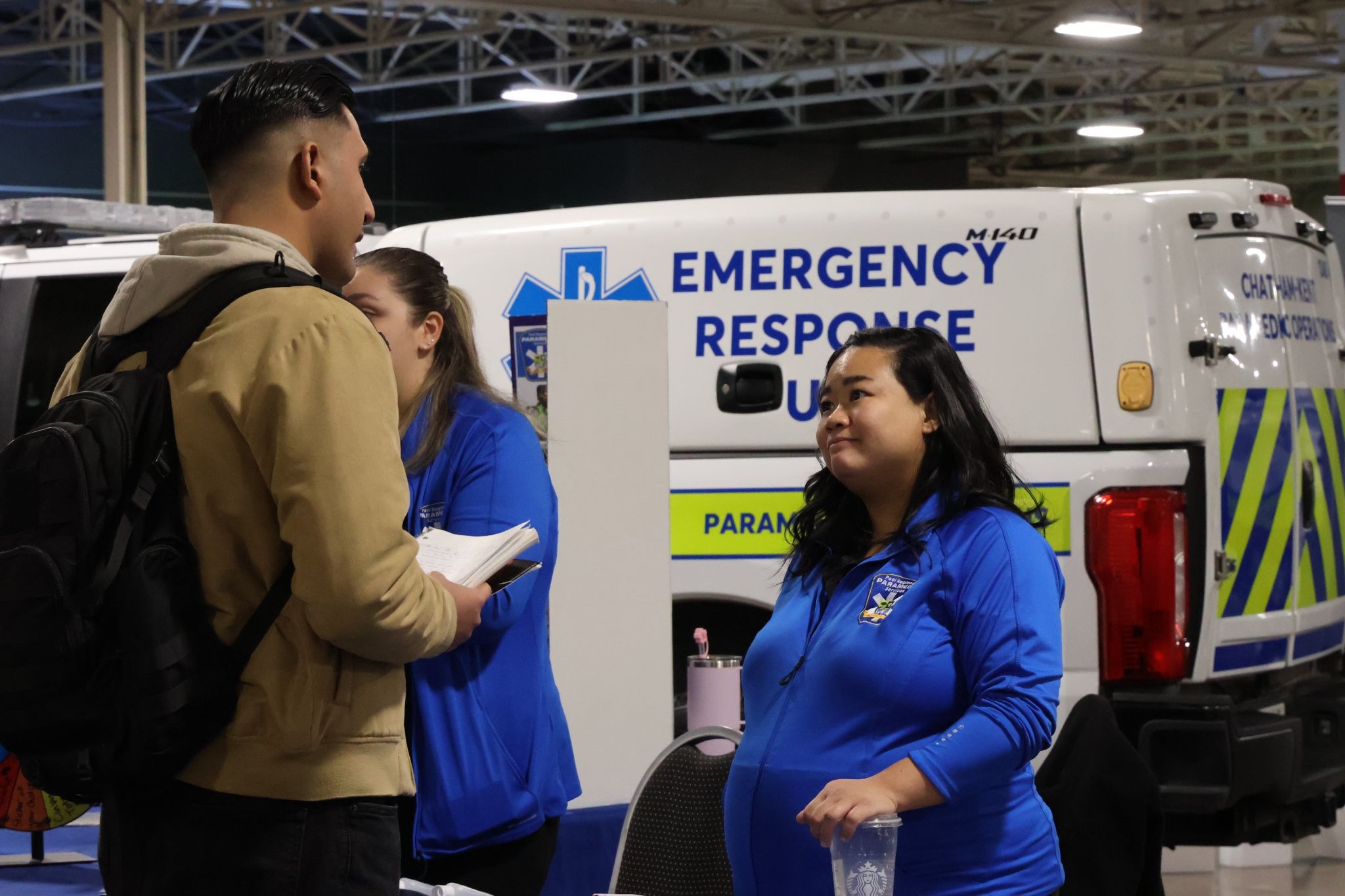
Municipal hiring can feel like a gauntlet because each stage tests something different. The good news is that the stages are not random. Once you understand what each one is trying to evaluate, preparation becomes much more focused.
Stage 1: Resume Submission
Tailor your resume to the role rather than submitting one generic document everywhere. Emphasize relevant credentials, academic performance, clinical achievements, and experience (even that outside of the profession).
Keep the most relevant evidence easy to scan. Your goal is to make it obvious where you trained, what environments you worked in, what patient-care exposure you gained, and what credentials are current.
Need a second set of eyes before you start applying? Para-Mentors offers Resume & Cover Letter Support, including a free initial assessment and professional editing support tailored to paramedic applications.
Stage 2: Written Testing
The written stage may test clinical knowledge, protocols, medication math, pharmacology, situational judgment, and legal knowledge relevant to the service and profession. Preparation should go beyond memorizing facts. Practice applying clinical knowledge under time pressure and review the service's published information so you understand the environment you are trying to join.
Stage 3: Interview — MMI and Panel
Expect either Multiple Mini Interviews (MMIs) or traditional panel interviews. MMI-style stations may evaluate ethics, conflict resolution, professionalism, communication, and judgment. Panel interviews commonly use behavioral or experience-based questions such as “Tell me about a time when…”
Para-Mentors tip: Prepare specific examples from school, placements, work, volunteering, or leadership that can be applied to your interview questions!
If interviews are the stage you're most concerned about, Para-Mentors offers MMI Interview Preparation, including mock MMIs, private preparation sessions, and structured feedback.
Stage 4: Practical Scenarios and Skills Testing
Each service handles this differently. Your application package may indicate what format this takes, which can help you prepare! This stage could be as rigorous as a high-fidelity 7 station OSCE, or as straightforward as a skill station bellringer. Some employers skip this step entirely, leaving practical testing in the hands of colleges and base hospitals. Whatever the format, being up–to-date on your provincial guidelines and well practiced in scenarios will set you up for success.
More practice can help make these scenarios feel less unfamiliar. Para-Mentors offers Virtual Scenario Practice for an accessible way to gain insight about your clinical decision making, as well as In-Person Open Lab for candidates who want to rehearse scenarios using real paramedic equipment.
Stage 5: Driving Assessment
Driving assessments may evaluate ambulance driving skills, including non-emergency driving, reversing, and maneuvering a large vehicle. Do not treat this as an administrative hurdle; it is part of the employer’s assessment of operational readiness.
Part 5: The Final Hurdle — Base Hospital Certification

Passing the A-EMCA does not by itself complete the process of becoming an independently practicing paramedic. The A-EMCA is your provincial certification — Base Hospital delegation is the separate authority that lets you perform delegated medical acts in your practice environment.
What Is a Base Hospital?
Base Hospital certification is tied to medical oversight and delegation. A paramedic must be hired by a service before that service can sponsor them through the Base Hospital process.
The Base Hospital Certification Process
The process typically involves medical simulations evaluated by Base Hospital staff. In-person assessment is the general model, with virtual options used in some circumstances. A GRS-rated OSCE containing 7 scenarios is the gold-standard format.
Once the Medical Director is satisfied with your performance, the delegation/sign-off process allows you to practice within the applicable scope. Some services may also pair newly delegated paramedics with mentors during the initial transition period.
For candidates looking for additional hands-on practice before an OSCE or other clinical assessment, the Para-Mentors In-Person Open Lab provides access to paramedic equipment and optional mentor support.
Why Base Hospital Certification Matters
Base Hospital delegation is not just another checkbox. It is the bridge between being academically certified and being authorized to perform delegated medical acts within the service environment.
There's also a mobility advantage: once you're certified by a Base Hospital in Ontario, other services may offer a more streamlined pathway for transfer or hiring. The exact process varies, so confirm requirements with the receiving service and Base Hospital.
Maintaining Your Delegation
Delegation is an ongoing professional responsibility — not a one-time achievement. Continuing education, staying current with protocol changes, and meeting applicable call requirements all matter. Delegation can be suspended or revoked for clinical errors or other concerns, even while you continue to hold the A-EMCA.
Strategic advantage: Your first job is not only about getting onto an ambulance. It is also the beginning of your professional record, your references, your clinical confidence, and your mobility within the profession. Treat the early stage of your career as a foundation, not a temporary detour.
FAQ: Getting Hired as a Paramedic in Ontario
- How long does the municipal hiring process take?
Roughly four to six months from application through hiring. Timelines vary by service and intake, so monitor postings and prepare well before the application window opens.
- Can I get hired before passing the A-EMCA?
Some services may hire graduates as A-EMCA Pending. Verify the employer’s requirements and the timeline for completing the A-EMCA before applying for the position.
- Should I apply outside of my area?
Expanding your geographic search increases the number of opportunities you see. Northern Ontario, rural areas, and even out-of-province services are worth considering!
- What should I expect in a paramedic interview?
Expect employers to evaluate judgment, communication, professionalism, ethics, conflict resolution, and your ability to explain how you handled real situations. Prepare concise behavioral examples from clinical placements, employment, school, and volunteer experience.
- What is the difference between the A-EMCA and Base Hospital certification?
The A-EMCA is the provincial certification exam described in Hub 2. Base Hospital delegation is the medical authority to perform delegated medical acts in the practice environment. They are related but not interchangeable.
- How to Get Hired as a Paramedic in Ontario
- Build your target list. Match municipal, private, and patient-transfer employers to your goals and credentials.
- Track hiring cycles. Know when services post, and prep before intake opens.
- Sharpen your resume. Lead with clinical experience, competencies, and results.
- Apply on multiple fronts. Don't bank on one municipal intake a year.
- Study for written testing. Protocols, pharmacology, medication math, judgment.
- Prep for interviews. MMI-ready examples on ethics, communication, professionalism.
- Drill your scenarios. Assessment, technical skills, clear verbalization under pressure.
- Lock in documentation. VSS, Driver's Abstract, immunizations, references.
- Complete Base Hospital certification. Simulations and OSCE happen after you're hired.
- Keep building. Your first role is your foundation. [Hub 4 covers what's next.
Your Next Step
Getting hired isn't about being perfect, but about feeling comfortable and confident through every stage. The candidates who stand out understand what employers are actually testing for.
At the Paramedic Career Fair, paramedics and students connected face-to-face with services actively hiring across Ontario. The next Career Fair is coming: the fastest way to get in front of decision-makers. Register for the Para-Mentors Career Fair here→.
Para-Mentors also offers free consultations for resume review, interview prep, and scenario coaching.
Ready to take the next step?
<a href="https://paramentors.ca/contact" target="_self" style="text-decoration:none;display:inline-flex;align-items:center;justify-content:center;background:#d9ad4d;color:#111111;border:none;border-radius:8px;font-family:'Inconsolata',monospace;font-size:16px;font-weight:700;text-transform:uppercase;letter-spacing:0.2px;cursor:pointer;padding:1rem;box-sizing:border-box;" >Book a free consultation with Para-Mentors</a>